
Key takeaway
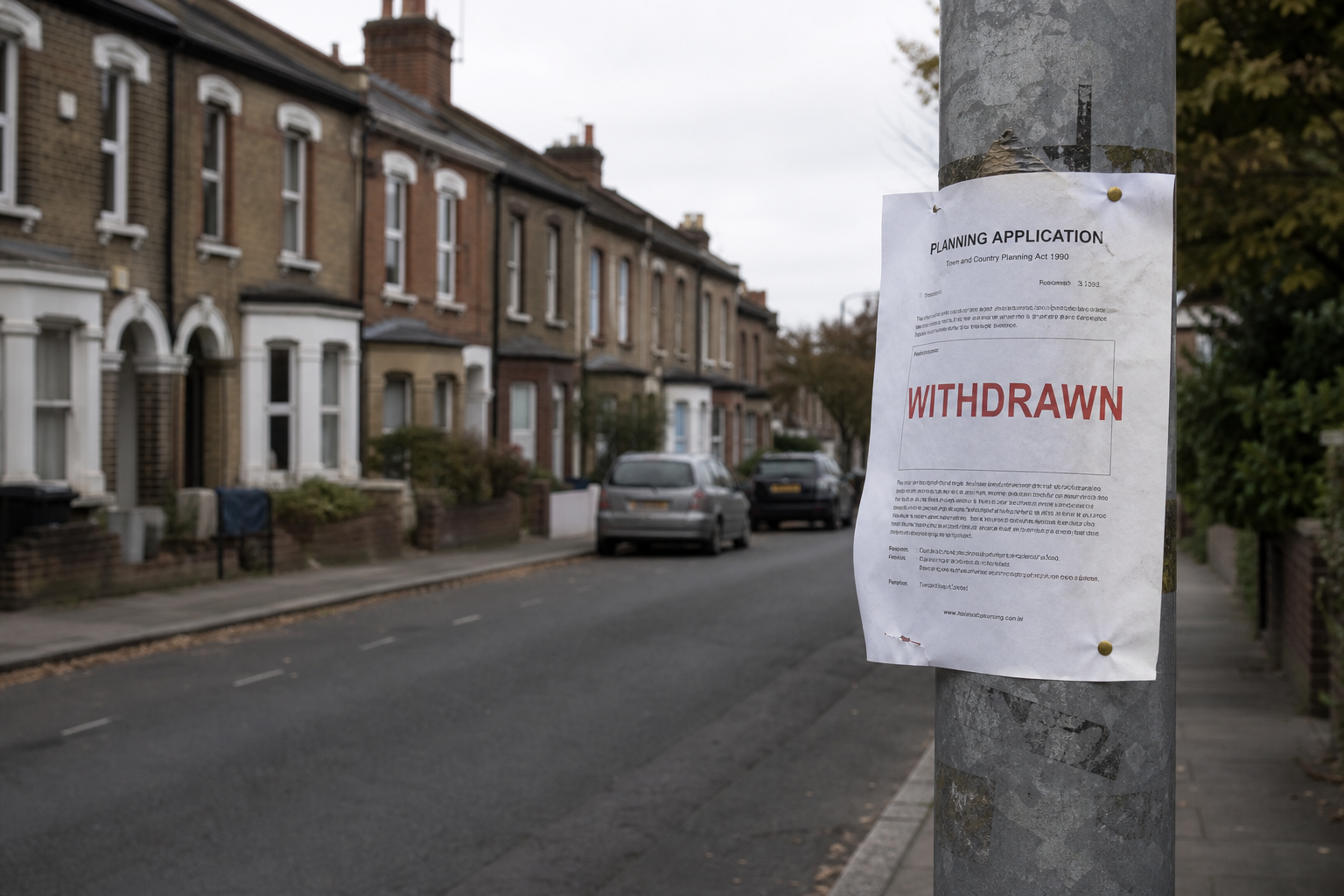
Objections can and do get planning applications withdrawn
When objections are well-reasoned and grounded in material planning considerations, applicants sometimes choose to withdraw rather than face refusal. This guide explains when and why that happens, and what makes an objection effective enough to matter.
Related reading:How to object — full guideValid objection groundsFree AI scan for your case
Planning Application Withdrawn After Objections — What It Means (UK)
Key Takeaways
- A withdrawal is not a planning refusal and does not create a precedent — the applicant can resubmit with the same or amended proposals.
- When an application is withdrawn and resubmitted, you must object afresh to the new application, referencing the new drawing sheet numbers.
- Your research, policy references, and photographs from the first application are reusable — but always update them to reflect any changes.
- Use Planning Guard to quickly update and resubmit a letter when a fresh application appears.
You lodged an objection, others did too, and then the application was withdrawn. This can feel like a victory — but in planning terms, a withdrawal is neither a refusal nor a precedent. It simply means the applicant has decided not to proceed with that particular application at that particular time. They can return, and often do.
This page explains what a withdrawal means in practice, what to watch for on the register, and how to prepare for what comes next.
Why Applications Are Withdrawn
Applicants withdraw planning applications for several reasons:
- Officer advice — the case officer may have indicated that the application is likely to be refused in its current form, and the applicant prefers to revise and resubmit.
- Objections received — a significant body of objections may prompt the applicant to revisit the scheme before a formal refusal is issued (which would affect their appeal statistics with the LPA).
- Commercial reasons — the scheme may be unviable in its current form for funding or delivery reasons unrelated to planning.
- Procedural reasons — incorrect application type, missing documents, or a need to amend the description.
Whatever the reason, a withdrawal does not resolve the planning question — it simply pauses it.
What a Withdrawal Is Not
| Withdrawal is… | Withdrawal is not… |
|---|---|
| The applicant's decision to end the current application. | A refusal by the LPA. |
| Possible at any time before a decision is issued. | A precedent that prevents future applications on the same site. |
| Sometimes followed quickly by a resubmission. | Evidence that your objections "won" — the balance may shift with amendments. |
What to Watch For After a Withdrawal
Monitor the Register
Set up alerts on the planning portal if your LPA supports this, and check the register regularly for new applications on the same site. Search by site address as well as previous application reference.
Drawings May Change
When an application is resubmitted, the drawings are often revised. The applicant may have addressed some of the objection points raised — or they may have made changes that introduce new concerns. Always base your new representation on the validated drawings for the fresh application, referencing the new sheet numbers.
Consultation Period Is Fresh
A resubmission triggers a fresh consultation period. The LPA will send new notification letters to neighbours. Do not assume your previous objection carries over — it does not apply to a different application reference. Submit a fresh representation before the new consultation deadline closes.
See planning application deadlines for how to manage consultation timing.
Reusing Your Previous Research
Your policy research, site photographs, and material arguments from the first application are still valuable. Much of the substantive work carries over, but you should:
- Update drawing references to the new sheet numbers in the fresh application.
- Check whether material concerns have been addressed — if the applicant has amended the scheme to address a concern you raised, acknowledge this and focus on remaining issues.
- Identify new concerns introduced by any amendments.
- Update policy references if the local plan has been updated in the interval.
- Re-confirm the deadline on the portal before lodging.
The Long Game in Planning Objections
Planning is iterative. Applicants, officers, and communities negotiate through the planning process — sometimes across multiple application cycles. The most effective objectors maintain a consistent, policy-led position tied to enduring policy tests, rather than varying their arguments from application to application in ways that undermine their credibility.
Keep a file of your previous objection, the officer's report, and any conditions that were discussed. This record will be valuable if the case returns.
Refresh Your Letter Quickly with Planning Guard
When a fresh application appears on the same site, Planning Guard can update your previous scan and letter draft to reflect the new drawings and any changes, so you can lodge a fresh, accurate representation quickly.
Start a new scan → | View pricing
Frequently Asked Questions
Does a planning application withdrawal mean the proposal is dead?
No. A withdrawal simply means the applicant has decided not to proceed with that particular application at that time. They can resubmit the same or an amended proposal without any waiting period.
Do I need to object again if an application is resubmitted?
Yes. A resubmission is a new application with a new reference number and a new consultation period. Your previous representation does not carry over automatically. You must submit a fresh representation during the new consultation window.
Does the applicant have to tell me why they withdrew the application?
No. Applicants are not required to explain withdrawals. The withdrawal notice on the planning register simply records that the application has been withdrawn.
Can the LPA refuse to accept a resubmission?
Generally no. Applicants have a right to submit planning applications. However, LPAs can refuse to validate applications that are substantially identical to recently refused applications if certain criteria apply. Withdrawal (as opposed to refusal) does not trigger these provisions.
Does a withdrawal affect the applicant's ability to appeal?
A withdrawal means there is no refusal decision, so there is nothing to appeal. If the applicant wants to appeal, they would need to allow the application to be determined (and refused) before appealing, or appeal on grounds of non-determination if the statutory period has elapsed.
Planning Guard helps you refresh a letter when the file changes — pricing. See also material planning considerations.
For government guidance on withdrawals and resubmissions, see Planning Practice Guidance — Making an application. For applicant appeal rights after refusal, see GOV.UK — Appeals against planning decisions.
More from this series
- Loss of privacy & overlooking planning objections (UK neighbour guide)
- Right to light vs planning objection: what neighbours need to know (UK)
- Reasons to object to planning permission (UK): what actually counts
- What happens after the planning objection deadline? (UK)
- How to find planning applications near me (UK)
- Planning objection letter template (UK)
- What counts as a material change of use in planning law? (England guide)
- Your rights as a neighbour during construction after planning permission is granted (UK)
When you are ready to turn this into a structured objection draft, start with the free material-grounds scan — no account needed to scan.
Email updates
Get occasional emails when we publish new planning guides and product updates. No spam — unsubscribe in one click from any message.
Explain your concerns clearly and in your own words
Free material-grounds scan — see what may count as material planning considerations. Optional editable letter from £7.99; you submit to the council yourself.Planning Guard is a drafting aid, not legal advice.
Not legal advice. Planning Guard is a planning tool to help you explore material planning issues and draft letters — not a solicitor or planning consultant. See Terms.