
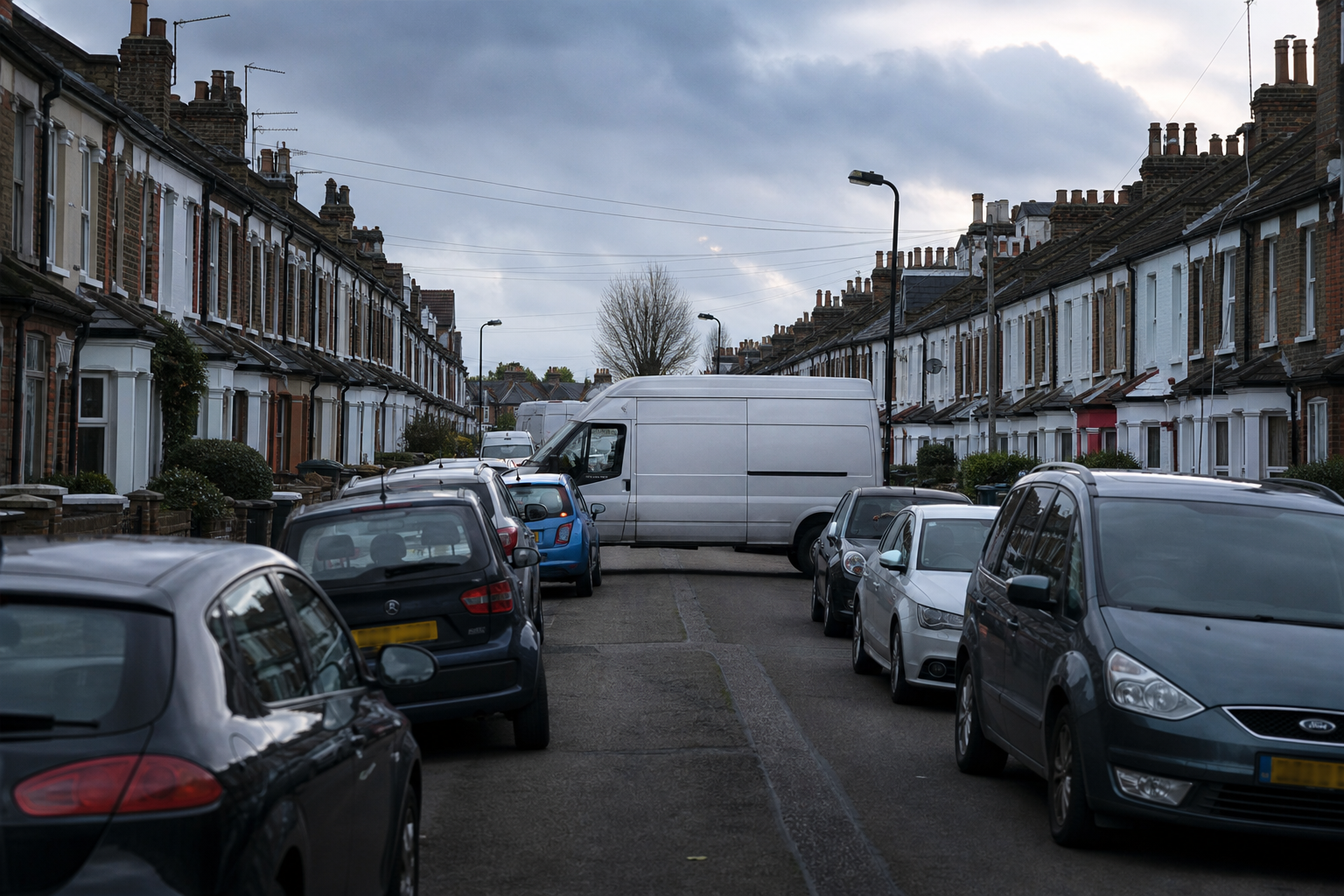
England & Wales — not legal advice. Noise is one of the most commonly raised issues in planning objections — and one of the most frequently raised ineffectively. General statements that a development will be noisy carry little weight with planning officers. Noise becomes a strong material planning consideration when it is grounded in the specific characteristics of the development, tied to an adopted policy or technical standard, and supported by evidence proportionate to the scale of the application.
This guide explains when noise is material, what documents to look for, how officers assess noise, and how to frame a noise-related objection that carries weight. For the broader context, see material planning considerations and residential amenity objections.
When noise is a material planning consideration
Noise can be material where:
- The proposed development would generate noise that affects neighbouring properties (commercial uses, entertainment venues, plant and equipment, industrial operations, or even dense residential developments close to quieter neighbours)
- The proposed development would place noise-sensitive uses (homes, schools, hospitals) in locations affected by existing noise sources (near roads, railways, or industrial areas)
- The noise impact has not been adequately assessed, or the assessment contains assumptions that can be factually challenged
Noise that is not connected to the planning use — construction noise during works, for example — is generally controlled under environmental health legislation rather than planning, and raising it as a planning objection ground is of limited value.
The policy framework for noise
The NPPF states that planning policies and decisions should prevent development from contributing to noise pollution. It supports the agent of change principle: the developer is responsible for mitigating the impacts of the noise they generate (or the noise the new development is exposed to).
Planning Practice Guidance on noise sets out the approach to noise assessment in planning decisions and asks decision-makers to distinguish between situations that are acceptable, marginal (noise is a consideration but permission may still be appropriate with mitigation), or unacceptable.
Local plan policies — most local plans contain specific policies on noise and amenity, often requiring developments to demonstrate that they will not cause unacceptable harm to neighbouring uses. Check your council's adopted local plan for the relevant policy and the threshold it sets.
Acoustic reports — what to look for
For applications with significant noise implications (food and drink venues, entertainment, industrial uses, plant-intensive development, or development close to major noise sources), the application should include an acoustic report or noise impact assessment.
When reviewing an acoustic report, look for:
Baseline measurements: Were noise measurements taken at representative receptor locations (the nearest dwellings, or the proposed residential units)? Were they taken at appropriate times — day and night, weekday and weekend?
Source characterisation: Has the applicant correctly characterised the noise source — including operating hours, type of noise (tonal, impulsive, or intermittent), and worst-case scenarios?
Prediction methodology: Has an appropriate prediction methodology been used (BS 4142 for commercial and industrial noise; BS 8233 for internal noise levels in new dwellings)?
Mitigation: Are the proposed mitigation measures (acoustic glazing, mechanical ventilation, noise barriers, operational restrictions) proportionate to the predicted impact? Are they secured by condition?
Residual impact: After mitigation, what is the predicted residual noise impact at receptors? Is it within the target levels recommended by PPG or the relevant British Standard?
British Standards and guidance levels
Officers and acoustic consultants routinely reference:
- BS 4142:2014+A1:2019 — method for rating and assessing industrial and commercial sound (used to assess noise from commercial operations, plant, and delivery)
- BS 8233:2014 — guidance on sound insulation and noise reduction in buildings (used to assess internal noise levels in new dwellings)
- WHO night noise guidelines — referenced in planning guidance for residential development near transport noise
These standards set recommended levels but are not absolute legal limits. Where the applicant's acoustic report predicts levels above guideline values and argues that conditions will mitigate them, you can challenge whether those conditions are robust enough to achieve the stated outcome.
Tonal and impulsive noise
Some types of noise are more intrusive than their dB(A) level would suggest. Tonal noise (a dominant pure tone, such as a constant hum from a ventilation unit) and impulsive noise (sudden impacts, such as a bottle bank or loading bay activity) are penalised under BS 4142, adding a 5dB correction to the rating level. If the application involves plant or operations likely to generate tonal or impulsive noise, check whether the acoustic assessment has applied the appropriate corrections.
Hours of operation
For commercial and hospitality uses, the approved hours of operation are one of the most significant noise controls. If the hours proposed in the application seem incompatible with the character of the area or the proximity of residential properties:
- What hours are proposed, and what are the existing ambient noise levels during those hours?
- Are neighbouring residents in a position to be affected (evening and night-time noise is typically more harmful than daytime noise of the same level)?
- Does the local plan contain policies limiting certain uses or hours in residential areas?
Noise from residential development
Residential development itself can be a source of noise — particularly on dense schemes where communal areas, car parks, cycle stores, and bin collection points are close to habitable rooms. Where you are objecting to a residential scheme that would place noise-generating facilities close to your property, identify the specific element (plant room, car park entrance, bin enclosure) and its proximity to the nearest receptor.
Noise from transport
Where a development is proposed adjacent to a major road, railway, or flight path, the application should address how the development will be made suitable for occupation given the existing noise climate. Internal noise levels in new dwellings are assessed against the standards in BS 8233 and the WHO night noise guidelines. If the application does not include an acoustic assessment where one would normally be expected, this is a relevant gap to raise.
Framing your noise objection
- Identify the noise source — plant, operations, vehicles, occupants, or existing ambient sources?
- Identify the receptor — which property, which room, which time of day or night?
- State the policy conflict — which local plan policy, NPPF paragraph, or PPG standard is relevant?
- Engage with the submitted assessment — if there is an acoustic report, identify specific gaps or assumptions you dispute; if there is no report where one should be expected, say so
- State the outcome you want — refusal, or specific conditions (noise limits, hours, acoustic measures before occupation)?
The government's noise guidance for planning is in Planning Practice Guidance — Noise. For technical noise assessment standards, see BS 4142 and BS 8233.
Structure arguments with our scan and letter tools — you verify citations. See also residential amenity objections and material planning considerations. Planning Guard's free scan is the starting point. Not legal advice.
More from this series
- Loss of privacy & overlooking planning objections (UK neighbour guide)
- Right to light vs planning objection: what neighbours need to know (UK)
- Reasons to object to planning permission (UK): what actually counts
- What happens after the planning objection deadline? (UK)
- How to find planning applications near me (UK)
- Planning objection letter template (UK)
- What counts as a material change of use in planning law? (England guide)
- Your rights as a neighbour during construction after planning permission is granted (UK)
When you are ready to turn this into a structured objection draft, start with the free material-grounds scan — no account needed to scan.
Email updates
Get occasional emails when we publish new planning guides and product updates. No spam — unsubscribe in one click from any message.
Explain your concerns clearly and in your own words
Free material-grounds scan — see what may count as material planning considerations. Optional editable letter from £7.99; you submit to the council yourself.Planning Guard is a drafting aid, not legal advice.
Not legal advice. Planning Guard is a planning tool to help you explore material planning issues and draft letters — not a solicitor or planning consultant. See Terms.