
Air Quality and Planning Applications (England and Wales)
Key Takeaways
- Air quality is a material planning consideration where adopted policy or national frameworks require assessment — most commonly for major schemes near busy roads, industrial uses, or in Air Quality Management Areas (AQMAs).
- For most small householder applications, air quality is unlikely to be a significant material concern.
- Challenge the applicant's air quality assessment on factual and policy grounds — not with invented pollution figures.
- Use Planning Guard to identify whether air quality policies apply to your case.
Air quality can be a material planning consideration in the right circumstances — but it is not automatically relevant to every planning application. Understanding when it applies, what evidence matters, and how to comment usefully will make your representation far more effective than a general expression of concern about pollution.
When Is Air Quality a Material Consideration?
Air quality is most likely to be material in the following situations:
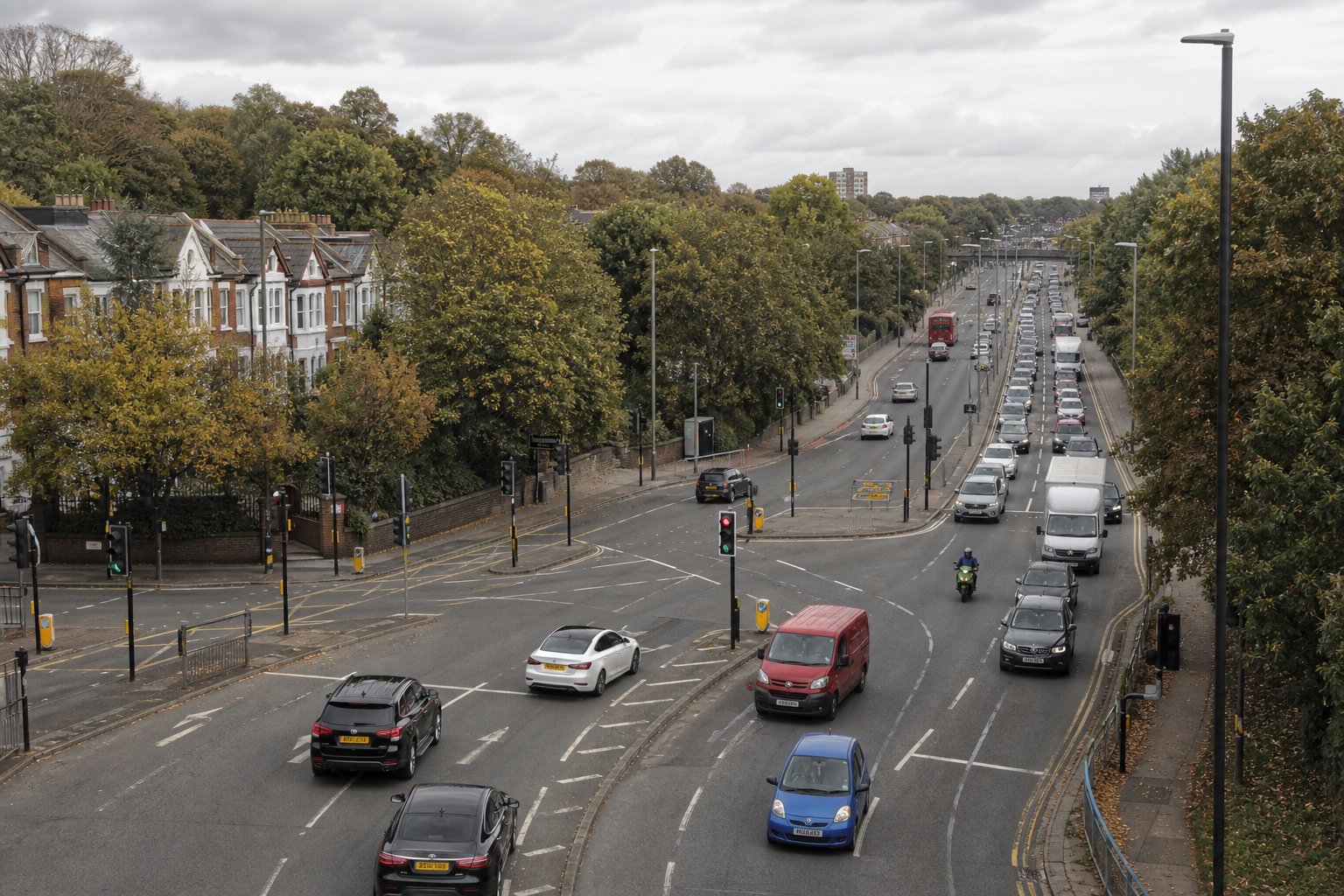
- Development near busy roads or motorways — where traffic-related emissions affect new or existing sensitive receptors (homes, schools, hospitals).
- Industrial, biomass, or combustion plant — where operational emissions are a direct product of the use proposed.
- Large commercial or residential schemes generating significant additional traffic in an area with existing poor air quality.
- Sites within or near an Air Quality Management Area (AQMA) — designated by the local authority where national air quality objectives are not being met.
- Change of use to a sensitive use (such as housing) near an existing pollution source.
For most householder applications — extensions, outbuildings, loft conversions — air quality is unlikely to be a significant material concern unless the extension involves a biomass boiler, generator, or other combustion plant.
Air Quality Management Areas
Local authorities in England and Wales must declare AQMAs where national air quality objectives are being exceeded. If the application site is within or near an AQMA, check whether the local plan includes specific policies requiring air quality assessment or mitigation for development in that area.
You can find AQMA boundaries on your LPA's website or through your local authority's environmental health pages. Some authorities also publish air quality action plans that inform planning policy.
Reading the Air Quality Assessment
Many major applications include an air quality assessment (AQA) as part of the Environmental Statement or as a standalone technical report. Before drafting your objection, read the AQA and look for:
- Which pollutants are assessed — typically NO2 and PM2.5/PM10 for traffic-related schemes.
- Background concentrations used as the baseline — are these derived from recent monitoring data or modelling?
- Predicted contributions from the development — are the traffic generation assumptions consistent with those in the transport assessment?
- Cumulative impacts — has the assessment considered other committed developments in the area?
- Mitigation measures — are they shown on the validated drawings and proposed as enforceable conditions?
- Sensitive receptors — are all nearby homes, schools, and health facilities included in the assessment?
If you can identify specific gaps — an omitted receptor, an outdated background data source, an inconsistency between the traffic assessment and air quality assumptions — state them precisely with section references.
What Weakens an Air Quality Objection
- Invented pollution figures — do not claim specific concentration values without a credible source.
- "The area is already polluted" without linking to AQMA designation, monitoring data, or policy.
- General concern without engaging with the applicant's assessment.
- Applying major-scheme standards to minor applications — air quality assessment is not proportionate for every householder case.
Policy Sources for Air Quality Objections
- Local plan — search for policies on air quality, AQMAs, and environmental health in the development management chapter.
- NPPF (England) — the current edition includes references to air quality in the context of transport, health, and the natural environment. Quote the relevant paragraph with its number from the current PDF. See the NPPF and your objection.
- Planning Practice Guidance — GOV.UK's Planning Practice Guidance includes sections on air quality that explain how assessments should be carried out.
- Your LPA's air quality action plan — may set out specific development requirements in designated areas.
Get an Air Quality Objection Drafted
Planning Guard can identify the air quality and environmental policies relevant to your case and produce a structured letter that frames your concerns in material planning terms.
Start your free scan → | View pricing
Frequently Asked Questions
Is air quality a valid reason to object to planning?
Yes, where it is material. Air quality is a recognised material planning consideration for major schemes near busy roads, in Air Quality Management Areas, or where the development involves significant combustion or emissions. For minor householder applications, it is unlikely to be a significant ground.
What is an Air Quality Management Area?
An Air Quality Management Area (AQMA) is a designated area where a local authority has determined that national air quality objectives are not being — or are not likely to be — achieved. Local authorities must prepare action plans to address poor air quality in AQMAs, and planning policy in these areas often requires specific assessment or mitigation.
Can I challenge an air quality assessment in a planning objection?
Yes. You can challenge the methodology, background data, cumulative impact assumptions, or omitted receptors in an air quality assessment, provided you can identify specific factual gaps or errors. Reference the relevant section of the report in your objection.
How do I find out if a site is in an Air Quality Management Area?
Check your local authority's environmental health pages or planning policy pages. Many LPAs publish AQMA boundary maps and associated action plans. Some national databases also map AQMAs, though local sources are more reliable for specific boundaries.
Does air quality apply to small extensions?
Air quality is generally not a significant material consideration for small householder extensions unless the extension involves a new combustion source (biomass boiler, generator). Focus your objection on the material concerns that genuinely arise from the validated proposal.
Structure other material themes with material considerations + our tools. See also residential amenity objections.
More from this series
- Loss of privacy & overlooking planning objections (UK neighbour guide)
- Right to light vs planning objection: what neighbours need to know (UK)
- Reasons to object to planning permission (UK): what actually counts
- What happens after the planning objection deadline? (UK)
- How to find planning applications near me (UK)
- Planning objection letter template (UK)
- What counts as a material change of use in planning law? (England guide)
- Your rights as a neighbour during construction after planning permission is granted (UK)
When you are ready to turn this into a structured objection draft, start with the free material-grounds scan — no account needed to scan.
Email updates
Get occasional emails when we publish new planning guides and product updates. No spam — unsubscribe in one click from any message.
Explain your concerns clearly and in your own words
Free material-grounds scan — see what may count as material planning considerations. Optional editable letter from £7.99; you submit to the council yourself.Planning Guard is a drafting aid, not legal advice.
Not legal advice. Planning Guard is a planning tool to help you explore material planning issues and draft letters — not a solicitor or planning consultant. See Terms.