
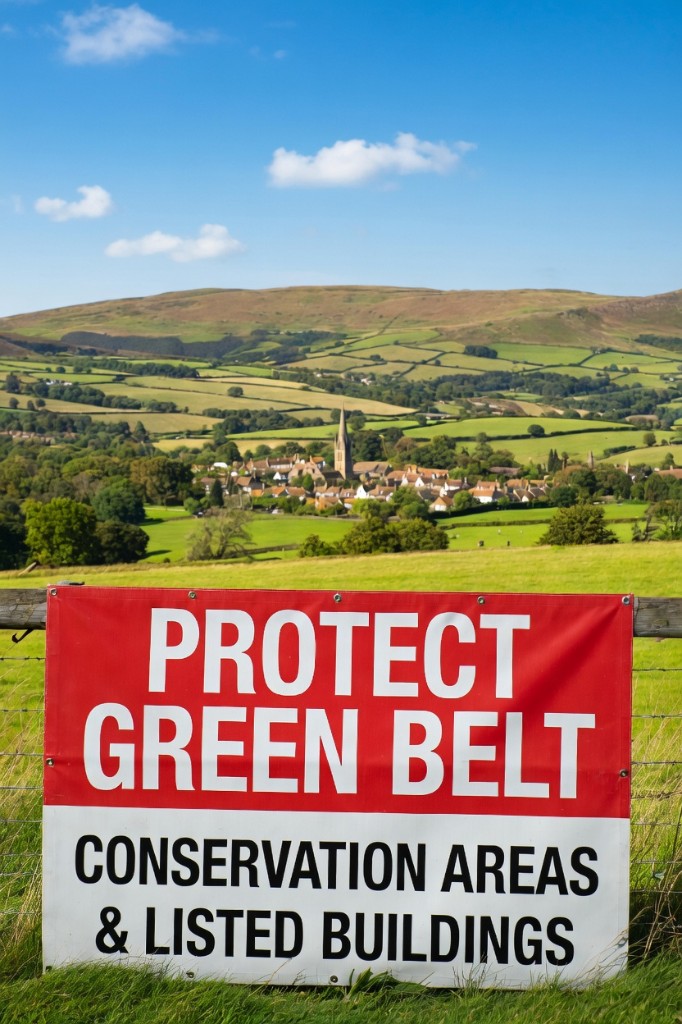
Green Belt, Conservation Areas, and Listed Buildings in Planning Objections (England)
Key Takeaways
- Green Belt and heritage protections carry heavy weight in national policy — but you must still tie arguments to specific NPPF tests and site facts, not general sentiment.
- For Green Belt, focus on openness, the five purposes, and whether development is "inappropriate" under the current NPPF.
- For heritage, read the applicant's heritage statement and challenge it with drawing references, photographs, and the correct NPPF harm tests.
- Use Planning Guard to identify the specific heritage and Green Belt policies that apply to your case.
Green Belt and heritage issues can dominate a planning objection because national policy gives them heavy weight in the planning balance. This page orients you before you draft your planning objection letter. It cannot replace reading the current NPPF, Planning Practice Guidance, and your local plan — but it shows you how to structure arguments that will be taken seriously.
First, anchor general policy reading in planning policy essentials. Then quote national paragraphs carefully using the approach set out in the NPPF and your objection.
Green Belt: What the Policy Actually Says
The Green Belt is not a general countryside protection designation — it has five specific purposes defined in the NPPF:
- To check the unrestricted sprawl of large built-up areas.
- To prevent neighbouring towns merging into one another.
- To assist in safeguarding the countryside from encroachment.
- To preserve the setting and special character of historic towns.
- To assist in urban regeneration by encouraging the recycling of derelict and other urban land.
Your objection becomes more credible when you identify which of these purposes the proposal harms — not just that "it's Green Belt so refuse it."
Green Belt: What Objectors Usually Argue
| Argument | How to make it credibly |
|---|---|
| Harm to openness | Explain how built form, excavation, or hard surfacing harms perceived or actual openness. Cite the validated sections and site plans with sheet numbers. |
| Conflicts with Green Belt purposes | Link the harm to one or more of the five purposes with specific site-level reasoning. |
| Inappropriate development | Show why the proposal falls within the definition of "inappropriate development" under the current NPPF (verify the terminology — it changes between editions). |
| Very special circumstances (VSC) insufficient | If the applicant claims VSC to justify inappropriate development, dissect their evidence: identify what is missing or overstated, and point to policy tests that have not been met. |
Never assume refusal is automatic. Officers weigh harm to the Green Belt against benefits using the tests in force at decision time. An objector who acknowledges this and then argues that harm outweighs benefits is more persuasive than one who simply asserts that Green Belt means no.
Heritage: Listed Buildings and Conservation Areas
Listed buildings, conservation areas, and other designated heritage assets attract great weight in the planning balance. The NPPF distinguishes between less-than-substantial harm (which must be weighed against public benefits) and substantial harm (which requires exceptional justification).
Before you draft, read:
- The applicant's heritage statement — this is their own assessment of the significance of the asset and the impact of the proposal.
- Historic environment record references — included in the heritage statement or case officer consultation list.
- Validated elevations and sections — to understand what is being changed, added, or removed.
- The conservation area appraisal — published by the LPA; sets out the character and appearance the designation is intended to protect.
Levels of Heritage Harm
The NPPF (England) operates a harm spectrum:
- Substantial harm to a designated heritage asset: almost always refused unless there are wholly exceptional circumstances.
- Less-than-substantial harm: weighed against public benefits using a balance test. The weight given to the harm increases with the significance of the asset.
- No harm: the proposal has been designed to preserve significance and setting.
When you draft your objection, identify where on this spectrum you believe the proposal sits, reference the specific features of the asset or conservation area that you believe are harmed, and explain why the applicant's heritage statement underestimates the impact.
Conservation Areas: Common Examples
Conservation area harm can arise from a range of proposals:
- Loss of positive contributor buildings where local policy protects the group value of a terrace or streetscape.
- Cumulative harm from incremental changes to sensitive squares, lanes, or historic frontages.
- Setting harm to a listed building when new works alter how people experience it from public vantage points.
- Inappropriate materials — modern render, uPVC windows, or solar panels on a prominent roof where local policy protects original materials.
Historic England
For national context and technical publications — including setting guidance and conservation principles — Historic England is the authoritative source for England. Note that Historic England does not decide your case; the LPA or, on appeal, the Planning Inspectorate does.
Practical Drafting Habits for Both Themes
- Quote short NPPF sentences with paragraph numbers from the current PDF — never from memory.
- Pair each quote with a photograph, plan reference, or heritage statement section number.
- Cross-check local design or conservation policies through local plan policies you can cite.
- Acknowledge the balance — show why harm outweighs any public benefits claimed, rather than asserting that harm alone dictates the outcome.
Get a Heritage or Green Belt Objection Drafted
Planning Guard can identify the specific Green Belt designation or heritage designation applicable to your site and produce a structured letter draft that applies the correct NPPF tests.
Start your free scan → | View letter options
Frequently Asked Questions
Can planning permission be granted in the Green Belt?
Yes. Some types of development are not inappropriate in the Green Belt (for example limited extensions to existing buildings, certain agricultural buildings, and facilities for outdoor sport or recreation). Beyond those exceptions, inappropriate development can still be permitted if "very special circumstances" clearly outweigh the harm to the Green Belt and any other harm.
What is "very special circumstances" in planning?
Very special circumstances (VSC) is the test an applicant must meet to justify inappropriate development in the Green Belt. The circumstances must be genuinely special and individually and cumulatively clearly outweigh the harm to the Green Belt. As an objector, scrutinise whether the VSC claimed is genuinely extraordinary or merely convenient.
What does "substantial harm" mean for listed buildings?
Substantial harm to a listed building or its setting means harm that would materially affect the significance of the designated heritage asset. The NPPF gives this significant weight in the planning balance and requires a clear and convincing justification to permit it. The meaning of "substantial" is assessed case by case by the decision-maker.
How do I find out if my neighbour's property is listed?
Search the National Heritage List for England maintained by Historic England. In Wales, use the Cadw register.
Does a conservation area appraisal affect my planning objection?
Yes. A conservation area appraisal identifies the character and appearance the designation is intended to protect. Officers and committees use it to assess whether proposals preserve or enhance that character. You can cite specific paragraphs from the appraisal in your objection.
Complex heritage or Green Belt cases may need specialist advice — this page cannot replace it. See also material planning considerations and deadlines.
More from this series
When you are ready to turn this into a structured objection draft, start with the free material-grounds scan — no account needed to scan.
Email updates
Get occasional emails when we publish new planning guides and product updates. No spam — unsubscribe in one click from any message.
Explain your concerns clearly and in your own words
Free material-grounds scan — see what may count as material planning considerations. Optional editable letter from £7.99; you submit to the council yourself.Planning Guard is a drafting aid, not legal advice.
Not legal advice. Planning Guard is a planning tool to help you explore material planning issues and draft letters — not a solicitor or planning consultant. See Terms.